A CEO’s Playbook: Balancing Authority With Empowerment
Home >> News >> Lithko >> A CEO’s Playbook: Balancing Authority With Empowerment
Posted By Nitin Nimbalkar
Mar 10, 2026, 2:00 PM
As CEO of Lithko Contracting, Rob Strobel’s approach to leadership is a tale of two very different formative experiences.
Strobel enlisted in the U.S. Army after high school in a quest to earn his way through college. Through his military service, he was steeped in the power of command authority, with its clear layers of rank, disciplined execution, and an intentionally designed approach to roles and responsibilities.
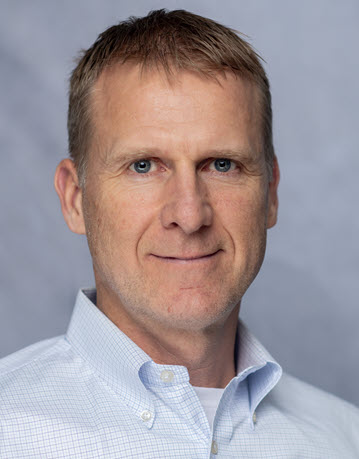
Rob Strobel
After completing his military commitment, he entered a small, private liberal arts college where the approach to leadership was almost the opposite—rooted in communication, consensus-building, and reconciling different viewpoints into shared commitment. Taken together, those two perspectives shape how he leads a privately held, middle-market concrete construction company.
“In commercial construction, people have choices,” Strobel says. “Contracts turn over, and sustained performance depends on an organization bound by a collective vision and purpose. That means hearing different viewpoints, building real buy-in, and creating an environment where people can fully engage rather than simply comply.”
For Strobel, the measure of leadership is whether the leader has followers, and whether those followers find meaning in their work. He discussed this approach to leadership and how it helps drive sustained growth with Aaron Zboril, a managing director and U.S. Audit & Assurance Family Enterprise leader with Deloitte & Touche LLP.
Zboril: What is your core approach for driving sustained growth?
Strobel: Sustained growth begins with defining a mission and casting a vision people want to join, then demonstrating its value through the opportunities we create. If people hear there’s opportunity and they can see it through the leadership vision, that’s motivating for them.
We’ve used big goals to make that vision tangible and drive focus. The target number matters less than what it enables: a steady expansion of work, responsibility, and leadership opportunities so people can build careers, not just jobs.
Translating vision into outcomes requires having a plan for scaling effectively. Rapidly growing organizations can’t rely on the unique skills or capabilities of a handful of knowledgeable people. To achieve growth at scale, it’s important to implement robust systems and processes so that critical knowledge is captured and disseminated throughout the company. This involves documenting best practices and fostering organizational clarity regarding roles and expectations.
How do you balance decisive leadership with consensus and empowerment?
It’s challenging. In the military, command authority is effective, but the culture of business is different. People have choices, so you have to earn followership through a collective vision and purpose, not just hierarchy.
I’ve learned to balance it through role clarity. You need a real command structure with input and buy-in, and the command structure has to mean something. People need to have clearly defined responsibilities so they can be the author of their piece of the work, and then they need to be accountable for it.
How do you operationalize this approach?
Day to day, it becomes real through authorship and fast feedback. Teams own their plans, we equip them with tools and clarity, and we monitor and measure outcomes. We have many metrics we use for monitoring performance on a daily basis to give people targets and provide them with feedback. This approach gives people the information they need to adjust and improve.
In this way, I find myself as the leader making a limited number of critical decisions. I focus more on supervision, observation, development, coaching, mentoring, and adjusting. Supervision and mentoring need to occur naturally through employees’ daily work to give them that constant feedback. If I find myself making too many important decisions, I need to step back and ask myself if I’ve effectively engaged and empowered my team as I intended. It suggests that I may not have provided them with enough clarity about expectations, roles, or team capabilities, or that our structure needs to evolve to meet the changing needs of the organization.
To what extent have markets and customer demands evolved, and how do you remain agile and continue to drive growth as conditions change?
We have seen demand shift from retail structures to warehouses and now data centers. It’s important to sense these shifts as they begin to develop and bring the resources, tools, information, and people required to execute differently.
Agility begins with a clear-eyed focus on outcomes. We have a great deal of data, so we need to be willing to look at reality and ask, ‘What worked before, and has it stopped working?’ When markets shift, we try to recognize it early and adjust rapidly, without turning it into a debate.
To stay agile, we work hard to reduce noise in the system and stay focused on what is truly predictive. We’ve tracked the same predictive metrics for decades—like secured-and-executed backlog as a percentage of future 12-month sales—so we can maintain a positive trajectory with as few peaks and valleys as possible. We also align incentives to the collective greater good, so the organization behaves like a healthy organism—seeing what helps, what hurts, and adapting in real time.
What advice would you give to a new CEO about building a durable organization?
Don’t be confined by how other people do things. Use outcomes as the barometer of what works, not tradition or convention. Execute with excellence in the areas where you excel and then be very intentional about what it really takes to extend or improve that.
Take supervision and mentorship seriously. If you see a talent gap on your team—for example, someone isn’t as capable as they need to be in their role—you owe it to the individual and the organization to help that person. Help build self-awareness around their strengths and align them to the right role so that the organization can grow. And build something people want to follow. Resilience and durability come from people being held together for a shared purpose.
Organizational development is like managing threads—strategy, structure, talent, process, and information—all of which need to align to meet customer needs. You can’t force these threads; instead, you must pull each strategically, paying attention to their interconnections. Leaders are responsible for balancing these elements to help the organization develop cohesively. Consider how shifting the tension or the slack on one thread, like talent or technology, impacts the others to maintain alignment and effectiveness.